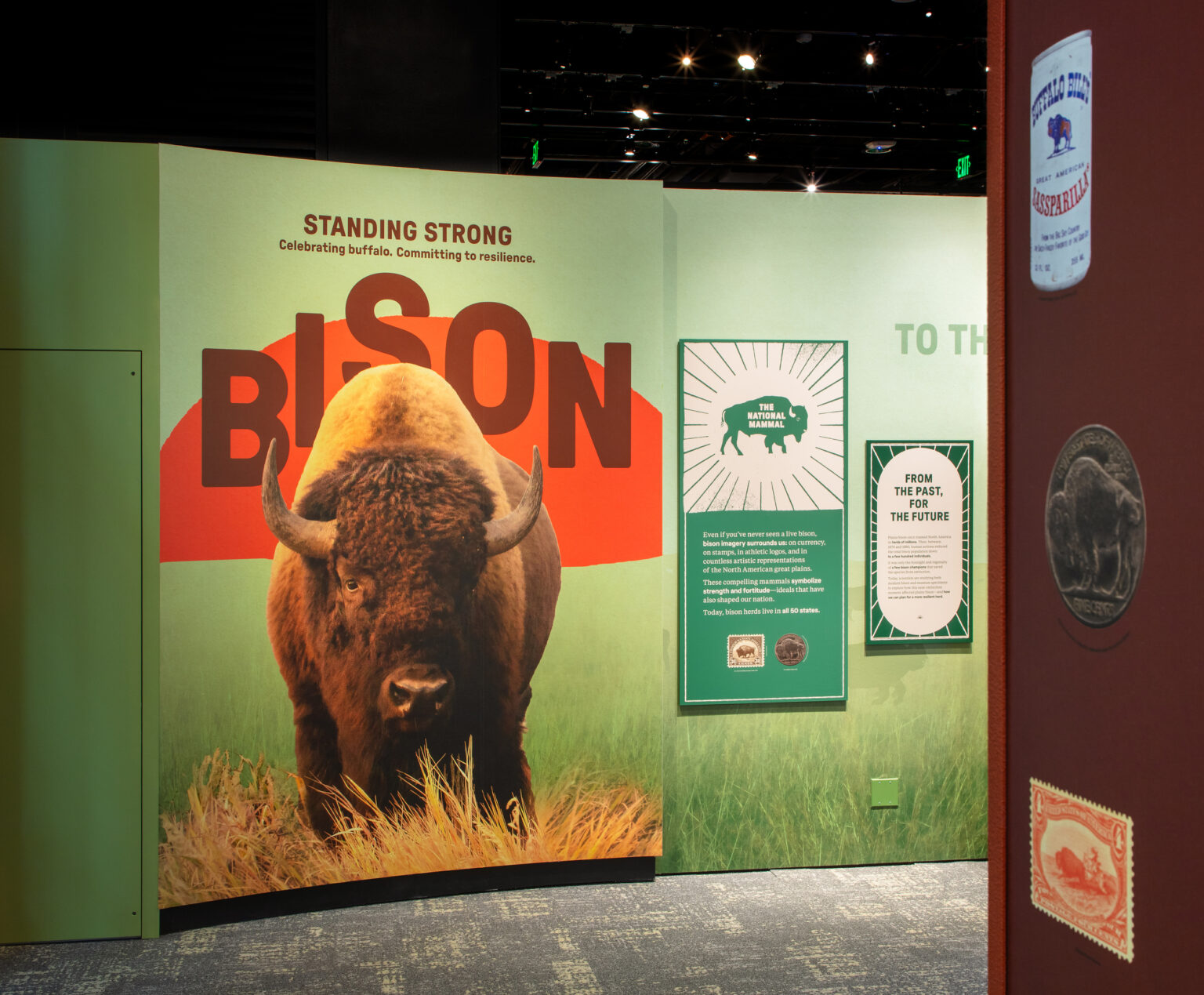
An exhibit tracing the cultural and ecological legacy of American bison opens May 7 at the Smithsonian National Museum of Natural History on the National Mall in Washington, D.C. “Bison: Standing Strong” commemorates both the 250th anniversary of the nation and the 10th anniversary of the naming of the bison as our national mammal.
University of Illinois Urbana-Champaign history professor Rosalyn LaPier is an advisor for the exhibit. LaPier is an environmental historian and ethnobotanist whose teaching and research focuses on environmental issues within Indigenous communities, and she is an enrolled member of the Blackfeet Tribe of Montana and Métis. She has been a research associate with the National Museum of Natural History for 10 years.
LaPier was involved throughout the process of creating the exhibit during the past two years. She provided information about the best research available on various topics and wrote and edited text, including writing the text for a panel that describes the Blackfeet creation myth of the bison. She also reviewed and made suggestions for the short films that are part of the exhibit. She said she was part of a team of dozens of people that included the museum curators, designers, and Indigenous peoples who contributed to the videos and text, along with facilities and construction workers.
LaPier is featured in one of the videos in the bison exhibit, where she is seen at Urbana’s Meadowbrook Park, overlooking tallgrass prairie. She said she was interviewed about the relationship between Indigenous people and the bison, including their religious practices and creation myths that include bison and their ecological knowledge about bison and their grassland habitat. The filmmakers also were interested in how the near extinction of bison impacted Indigenous communities, she said.
“The religious practices continued. They still had their rituals and creation myths around the bison even though the physical bison were not there for 100 years. Even though there’s this absence, there’s still a presence of bison because people continued the religious practice that was centered around bison,” LaPier said.
“You cannot tell the story of the national mammal without telling the story of the Native communities that relied on bison for thousands of years,” said Kirk Johnson, the Sant Director of the National Museum of Natural History. “We are grateful to Rosalyn for sharing her expertise to help us explore the enduring relationship between bison and Native communities in ’Bison: Standing Strong.’”
The exhibit includes many artifacts from the museum’s collection. LaPier said she worked with curators on reviewing the artifacts and deciding what stories to tell and what items in the collection to use.
LaPier also was an advisor and was interviewed for the Ken Burns’ documentary “The American Bison,” and she was featured in the film “Rebirth of the Range,” about the revitalization of the bison, and in an episode of WILL-TV’s show “State of Change” that dealt with the prairie. One of the strengths of the Illinois history department is its faculty members who are involved in digital and public history — using their research to tell historical stories in public spaces, such as museum exhibitions, she said.
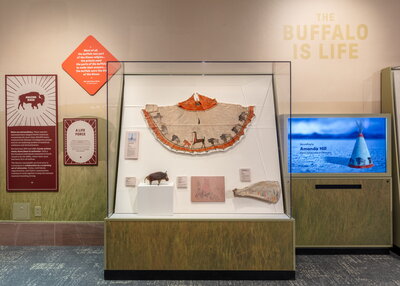
Photo by James D. Tiller, Smithsonian Institution
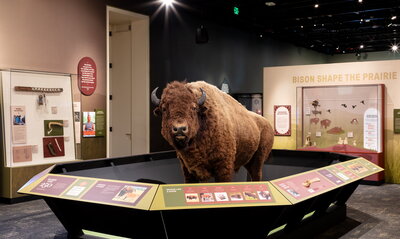
LaPier said the natural history museum exhibit comprises three rooms, the first of which tells about the ancient bison and the relationship between Indigenous people and the bison before white Europeans were present.
The second room tells of the near extinction of the bison and the beginning of their restoration. It includes a famous photograph of a mountain of bison skulls that covers one wall. Visitors can stand next to it and get a sense of the number of bison once living on the Great Plains that were killed, LaPier said. The photograph couldn’t be made life-sized because the room wasn’t big enough, she said.
The third room of the exhibit tells about the efforts of scientists, ecologists and Indigenous people to revitalize the bison population in the last 100 years.
“The current species of bison we have today evolved in North America 10,000 years ago and it has always existed with humans. It co-evolved with Indigenous people, and there has always been a very close kinship relationship between Indigenous people and bison,” LaPier said. “Because of that, it’s a really good choice to make in terms of a longer story about bison in North America that is not just about the 250th anniversary. It was an intentional choice. The natural history museum tells these really long stories about the history of the environment, animals and people over a long duration of time.”
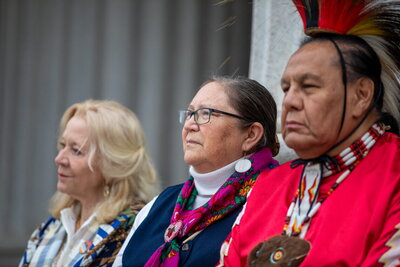
The exhibit also tells how bison co-evolved with the grassland ecology and how important they are to maintaining a healthy ecosystem, she said.
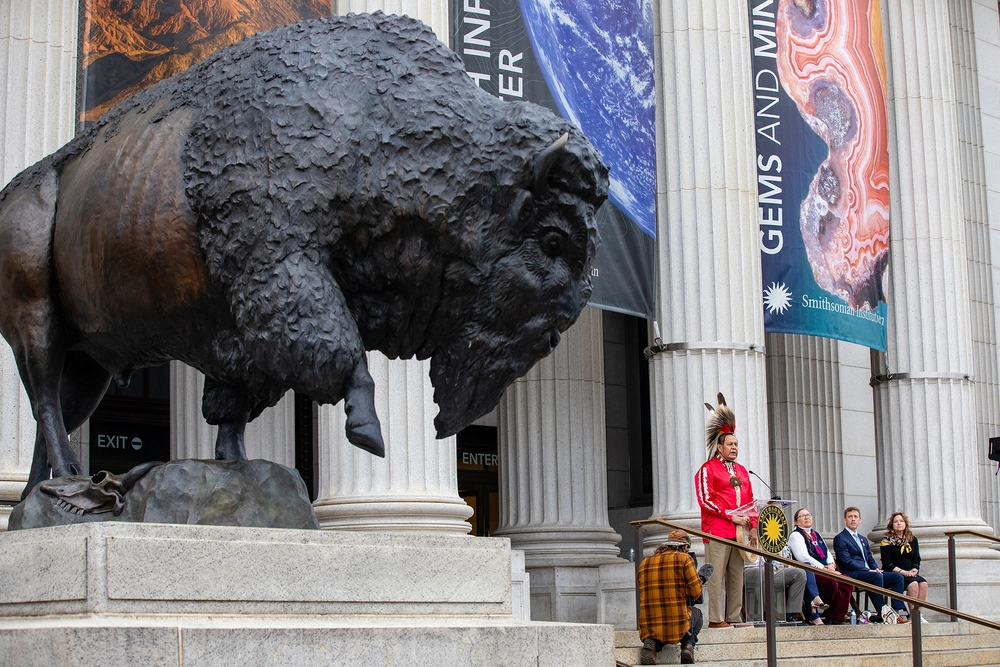
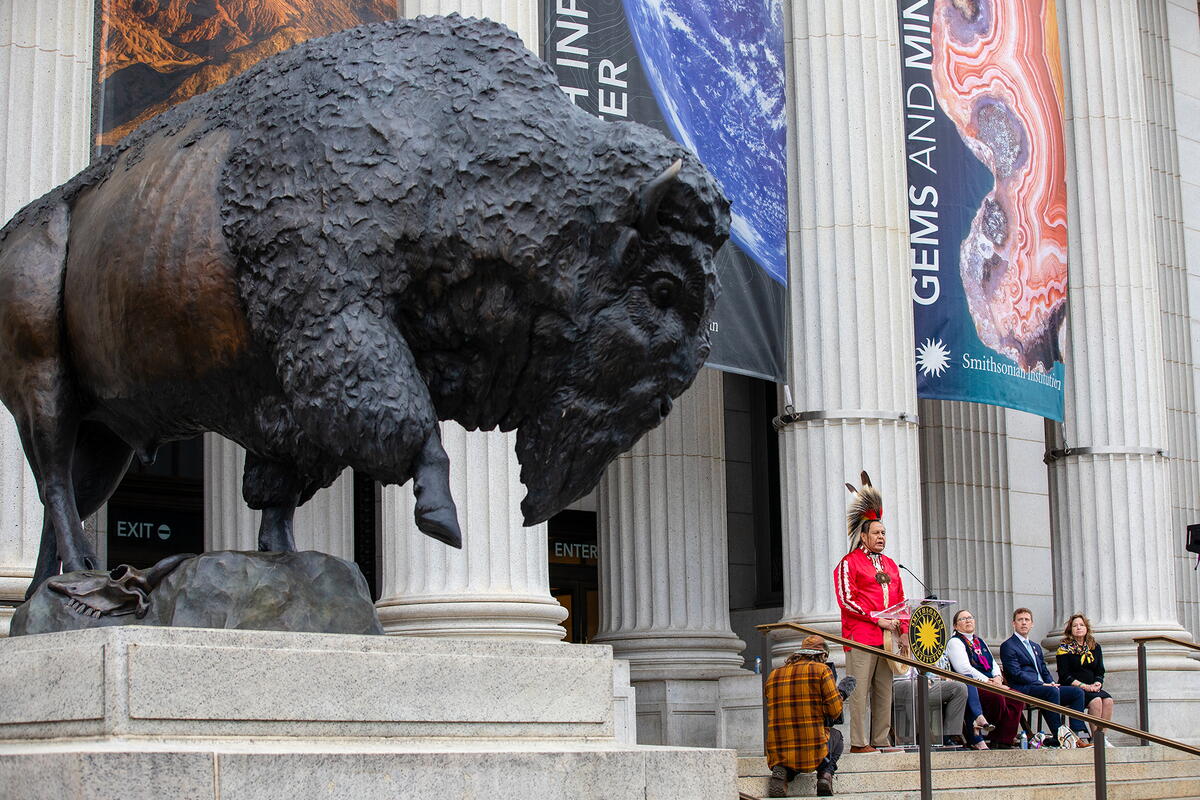
In conjunction with the bison exhibit, two enormous bronze statues of bison — a bull, cow and calf, created at 125% scale — were permanently installed in front of the museum in March. LaPier spoke at the April 2 ribbon cutting for the statues. They were modeled after specimens that zoologist William Hornaday collected and that were displayed in a Smithsonian exhibit from 1888-1957.
One of the most important messages LaPier hopes visitors take away from the exhibit is that the populations of even critically endangered animals can be restored.
“You can bring an animal back from near extinction. Even in today’s world, with climate change we are seeing plants, animals and fish being threatened. The story of bison shows that we got a lot of people together from all walks of life who wanted to save this animal and they worked in collaboration to bring it back. It’s an important story for people to recognize,” she said.
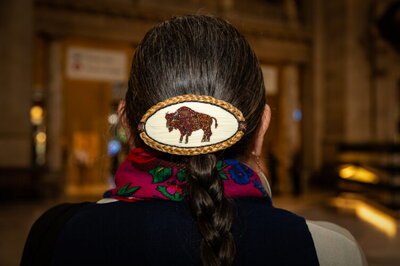
LaPier also hopes that the exhibit inspires people to go see living bison. She noted that the Kane County Forest Preserve District in Illinois recently acquired bison that live on one of its preserves.
“There are several places in Illinois where you can see bison living in a natural landscape, and they are beginning to change and impact it and make it a healthier place,” she said. “Hopefully people can go see our national mammal.”
Editor's Note: This story originally appeared on the University of Illinois News Bureau website.