
History @ Illinois 2025
Letter from the Chair
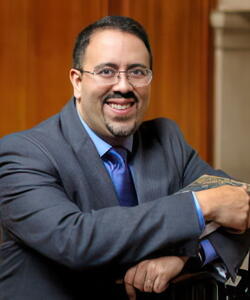
Welcome to our redesigned newsletter! As I enter the first year of my five-year term as chair, I am excited to work alongside faculty and staff to explore new directions for our department. I am grateful to the leadership of professor Dana Rabin, who led us through the pandemic and through a series of exciting hires and our External Review. She has set a high bar to follow.
New faculty members joined our ranks this fall. We recently welcomed professor Angela Diaz, a Civil War era southern historian, professor Deepasri Baul, a historian of modern South Asia, and professor Anna Jungeun Lee, a historian of Korean consumer culture, to our faculty. We also welcomed Chelsey Smith, a historian of 19th-century Jamaica, as a public humanities postdoctoral fellow. Next year, she will join our ranks as an assistant professor.
Professor Kai-wing Chow retired and joined our esteemed emeriti this year. We are conducting a search to fill the Crawford Professorship in Modern Chinese History. We hope to continue our momentum on hiring in the coming years.
I am proud of our many faculty and emeriti who published books this year and the recognition our faculty gain for their excellence in research and teaching on campus and beyond. Please read on to learn more about their accomplishments.
Exciting projects in the years ahead include upgrading and modernizing our facilities (including a graduate student lounge), introducing an inventive history + data science major, continuing to develop innovative undergraduate courses, and creating new opportunities for the department to engage with our local community. Our ability to undertake these projects, to deliver excellent teaching, and be a productive department is also the result of the efforts of our excellent staff.
Thank you to the continued support of our alumni and donors. Write to us at history@illinois.edu or fill out our alumni updates form to share your news and how your degree in history impacted your journey.
All the best,
Adrian Burgos, Jr.
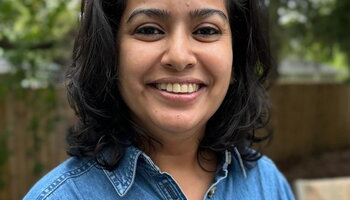
Deepasri Baul
Baul is a historian of modern South Asia, specializing in urban history, property regimes, and religious politics. Her research analyses how urban space is produced through the intersection of religion and property in late colonial Delhi.
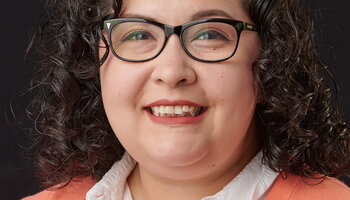
Angela Diaz
Diaz is a Civil War era southern historian. Her research interests include the Gulf South, U.S. territorial expansion, Latin America, Latina/Latino history, borderlands studies, and memory studies.
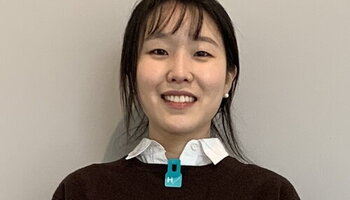
Anna Jungeun Lee
Lee is a historian of Korean consumer culture, material history, and capitalism. Her primary appointment is in the Department of East Asian Languages and Cultures, but she has a 25% appointment in history
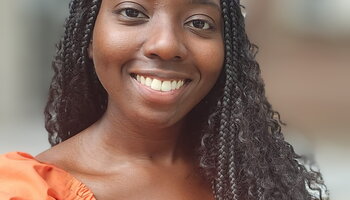
Chelsey Smith, Public Humanities Postdoctoral Fellow
Smith is a historian of 19th-century Jamaica. Her research interests include education, race, and labor in the Caribbean and Latin America. The College of LAS Public Humanities Fellow program is a unique opportunity for Smith to pursue a public engagement project with the Humanities Research Institute.
Recently Retired: Kai-wing Chow
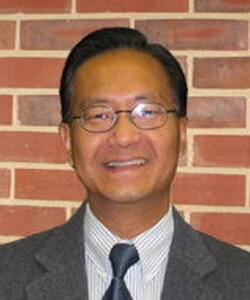
After 36 years of teaching in the departments of History and East Asian Languages and Cultures, Kai-wing Chow retired in May 2024. Chow is a highly esteemed historian of China with an international reputation. His areas of expertise include Chinese intellectual history, history of printing and publishing, and new cultural history. His works have been well received across mainland China, Taiwan, Korea, Hong Kong, North America, and Europe.
At his retirement party in June 2024, many colleagues and former graduate students spoke about the profound impact he has had on their careers.
One of his graduate advisees said, “Professor Chow is easily one of the smartest and most dedicated scholars I’ve ever met. He’s incredibly patient and always takes time to give helpful feedback on our research ideas. Plus, he genuinely cares about his students’ well-being, both mentally and physically. He has really set a great example for us, not just as a scholar but also as a mentor.”
Leslie Reagan named Robert W. Schaefer Professor in Liberal Arts and Sciences
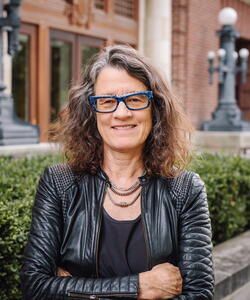
Reagan is a professor of history with appointments in gender and women’s studies, law, and media and cinema studies. She is a path-breaking and internationally recognized scholar of reproduction, medicine, public health, law, social activism, media, women, gender, and sexuality studies, and disability. She earned her bachelor’s degree at the University of California, Davis and her PhD in history at the University of Wisconsin-Madison, where she studied in the first women’s history program in the country and the History of Medicine Program in the College of Medicine.
She's the author of the award-winning book, When Abortion Was a Crime: Women, Medicine, and Law in the United States, 1867-1973, a definitive history of abortion during the century prior to Roe V. Wade. Justice Stephen Bryer, joined by Justices Sonia Sotomayor and Elena Kagan, cited the book in his dissenting opinion in Dobbs v. Jackson, the U.S. Supreme Court case that ruled there is no constitutional right to abortion. Reagan also contributed to the AHA-OAH Historians amici brief on behalf of the Jackson Women's Health Clinic in the Dobbs case.
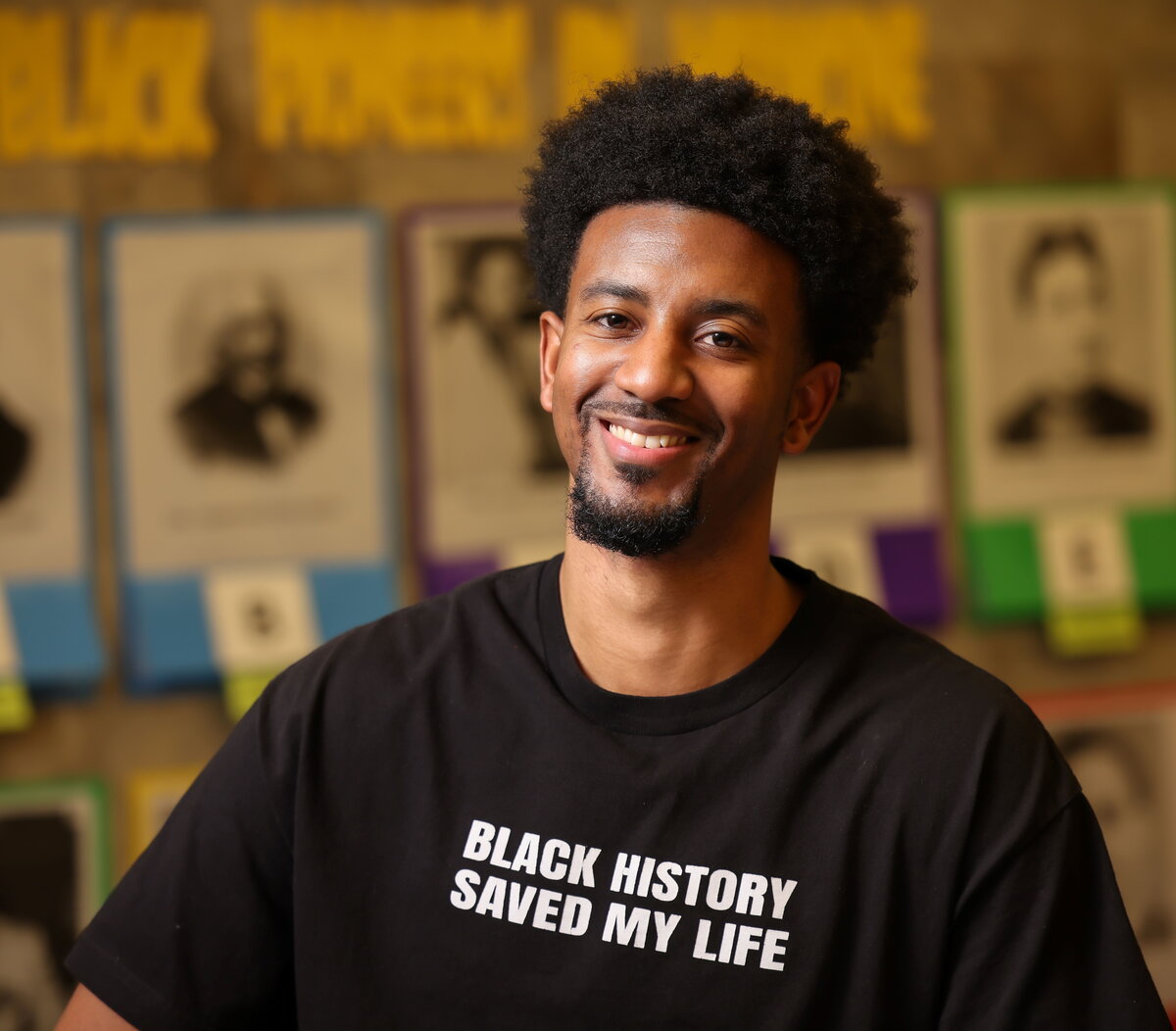
How Black history changed Ernest Crim III's Life
When Ernest Crim III (BA, ’09, history) started at the University of Illinois, he thought he wanted to be a psychology major because he was the friend that everyone confided in. Then, in the second semester of his freshman year, he took a Black history course taught by Clarence Lang that changed his life, and his major.
“I decided to take a Black history course, and I just absolutely fell in love with it and just learned more about my culture and the connection that I had back at home and in Africa. And I just kept going from there, honestly,” said Crim.
15 years after he graduated, Crim was honored by the College of Liberal Arts & Sciences with the 2024 LAS Outstanding Young Alumni Award. The award recognized Crim for teaching the important role Black history plays in becoming culturally competent and equitable in the workplace, school, and broader community.
Faculty Achievements
- Professor Teri Chettiar was selected as a Conrad Humanities Scholar, an award that recognizes promising mid-career scholars and provides financial support for continued achievement, research, and scholarship in humanities.
- Jorge Paulo Lemann Chair in Brazilian History Jerry Dávila, was selected as a Presidential Fellow and will serve as director of the Brasillinois initiative and as an advisor to President Killeen and Vice President for Economic Development and Innovation Jay Walsh.
- Professor Angela Diaz, was awarded the Michael V.R. Thomason Book Award from Gulf South Historical Association for A Continuous State of War: Empire-Building and Race-Making in the Civil War Era Gulf South.
- Professor Peter Fritzsche was appointed a Center for Advanced Study Professor. CAS professors are selected based on their outstanding scholarship and the appointments are one of the highest forms of campus recognition.
- Professor Marc A. Hertzman received an honorable mention for the James Alexander Robertson Prize from the Conference on Latin American History for his article "The 'Indians' of Palmares: Conquest, Insurrection, and Land in Northeast Brazil."
- Emeritus professor Keith Hitchins was honored by The Journal of Romanian Studies with a special issue dedicated to his scholarship.
- Professor Robert Michael Morrissey, was named a University Scholar in recognition of his excellence in teaching, scholarship, and service.
Faculty Promotions
- Tamara Chaplin, Professor of History
- Marc Hertzman, Professor of History
- Robert Michael Morrissey, College of LAS Associate Dean for Technology & Online Learning
- Carol Symes, Director of the Program in Medieval Studies
Conference held in honor of professor emeritus Charles C. Stewart
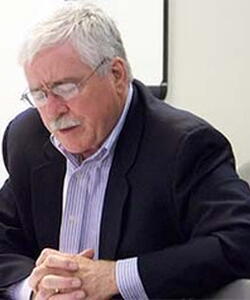
In September, professor Mauro Nobili and University of California, Berkeley professor Bruce Hall (PhD, ’05, history) organized a two-day conference in honor of professor emeritus Charles C. Stewart. The conference brought together an international group of scholars whose papers were offered in appreciation of Stewart’s many contributions to African history. Conference organizers plan to publish the papers in a two-volume book.
Over a long career, Stewart made many contributions to our understanding of Muslim West African history. He has worked with colleagues around the world to map the region’s intellectual culture based on the extant contents of Arabic manuscript libraries. Stewart and Hall built The West African Manuscript Database, the most comprehensive bibliographic database of West African manuscripts to date. The database was first started at the University of Illinois and is now housed at the University of California, Berkeley.
Title
New Books by Faculty
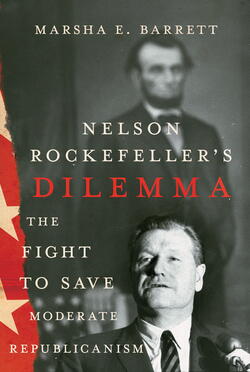
Nelson Rockefeller's Dilemma: The Fight to Save Moderate Republicanism
by Marsha E. Barrett
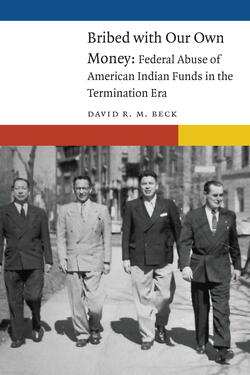
Bribed with Our Own Money: Federal Abuse of American Indian Funds in the Termination Era
by David R.M. Beck
Gender History: A Very Short Introduction
by Antoinette Burton
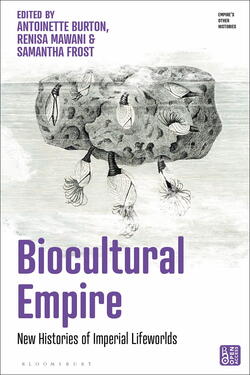
Biocultural Empire: New Histories of Imperial Lifeworlds
edited by Antoinette Burton, Renisa Mawani, Samantha Frost
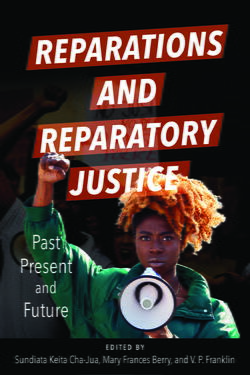
Reparations and Reparatory Justice: Past, Present, and Future
edited by Sundiata Keita Cha-Jua, Mary Frances Berry, and V.P. Franklin
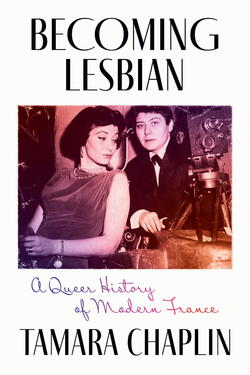
Becoming Lesbian: A Queer History of Modern France
by Tamara Chaplin
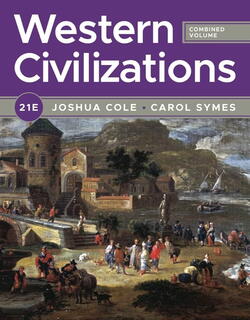
Western Civilizations: Twenty-First Full Edition
by Joshua Cole and Carol Symes
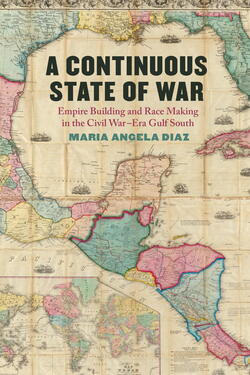
A Continuous State of War: Empire Building and Race Making in the Civil War–Era Gulf South
by Angela Diaz
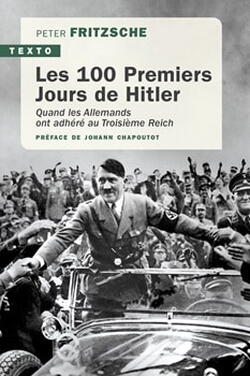
Les 100 Premiers Jours de Hitler: Quand les Allemands ont adhéré au Troisième Reich
by Peter Fritzsche
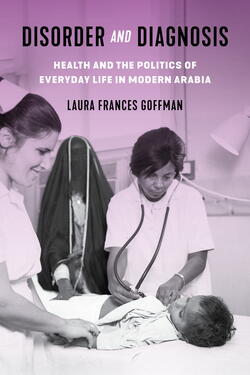
Disorder and Diagnosis: Health and the Politics of Everyday Life in Modern Arabia
by Laura Frances Goffman
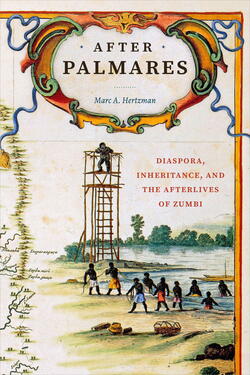
After Palmares: Diaspora, Inheritance, and the Afterlives of Zumbi
by Marc A. Hertzman
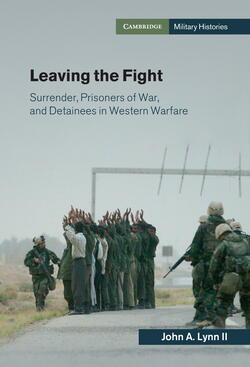
Leaving the Fight: Surrender, Prisoners of War, and Detainees in Western Warfare
by John A. Lynn II
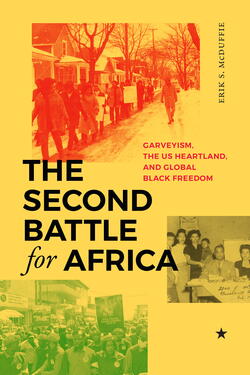
The Second Battle for Africa: Garveyism, the US Heartland, and Global Black Freedom
by Erik S. McDuffie
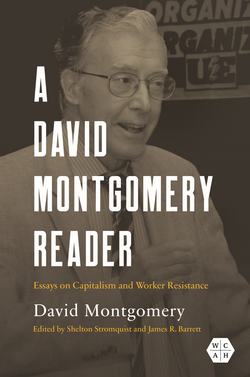
A David Montgomery Reader: Essays on Capitalism and Worker Resistance
by David Montgomery, edited by James R. Barrett and Shelton Stromquist
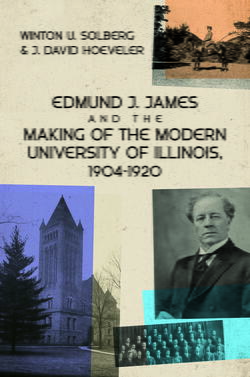
Edmund J. James and the Making of the Modern University of Illinois, 1904-1920
by Winton U. Solberg and J. David Hoeveler
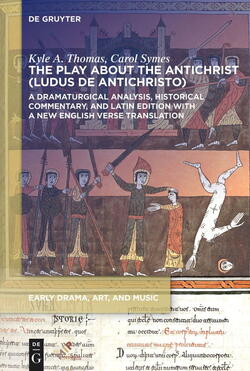
The Play about the Antichrist (Ludus de Antichristo): A Dramaturgical Analysis, Historical Commentary, and Latin Edition with a New English Verse Translation
edited by Kyle A. Thomas, translated by Carol Symes
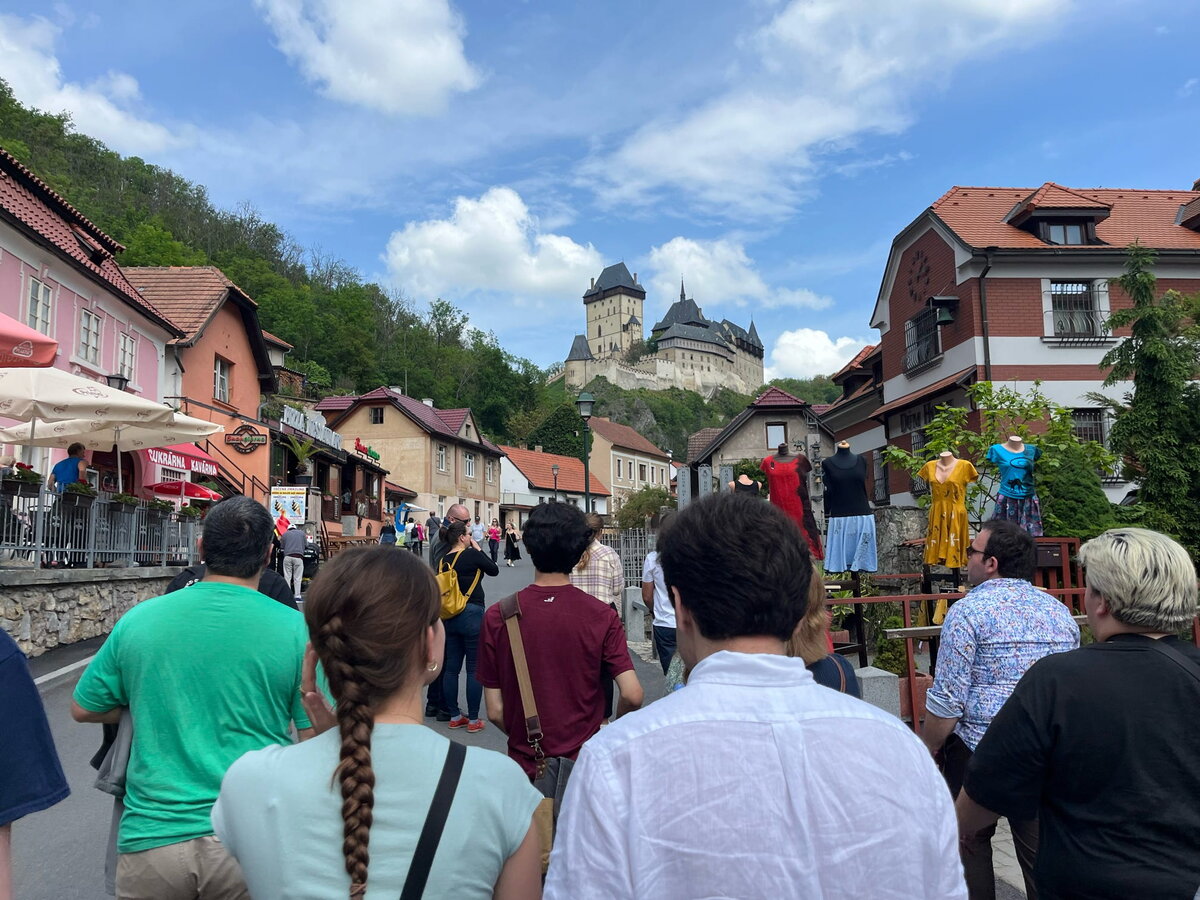
Learning world history, making Illini history: Inside our Study Abroad in Prague program
This year the Department of History, in partnership with Anglo-American University and LAS International Programs, organized its first study-abroad program in two decades under the direction of Stefan Djordjevic and Marco Jaimes. Twenty-two students travelled to Prague for two and a half weeks to study Czech history in the places it was made. Prague and the Czech Republic served as a case-study for exploring European history, focusing on Central Europe’s complex history of ethnic and confessional diversity and the challenges in navigating pluralism.
Title
Creating an innovative new degree program
This past year has been a productive one for the Undergraduate Studies Program. The most important development was the department’s decision to create a new Bachelor of Science in History degree program. This will fall under the broad campus initiative of Data Science +, a program designed to impart data science skills to students across a wide range of disciplines. The history BS will allow our undergraduates to do the work of a regular history curriculum while also taking 30+ hours of core data science coursework in statistics, math, and information sciences. While the degree itself won’t be available for a few years, owing to campus-wide approval processes, we know that it has a great appeal to several of our current students and will attract students who otherwise feel obliged to major in STEM fields.
The other major development in our undergraduate program this past year was a conference organized by our local Phi Alpha Theta chapter, comprised entirely of undergraduate history majors. It was a major logistical undertaking by our students, which resulted in great success. Read Graciela Best’s piece to learn more.
In 2024 we were also very fortunate to welcome Anthony Frasca into the newly-created position of undergraduate program coordinator. Anthony assists with daily program activities and organizes our major Undergraduate Studies Program events such as convocation, the awards dinner, and commencement.
James Brennan, Director of Undergraduate Studies
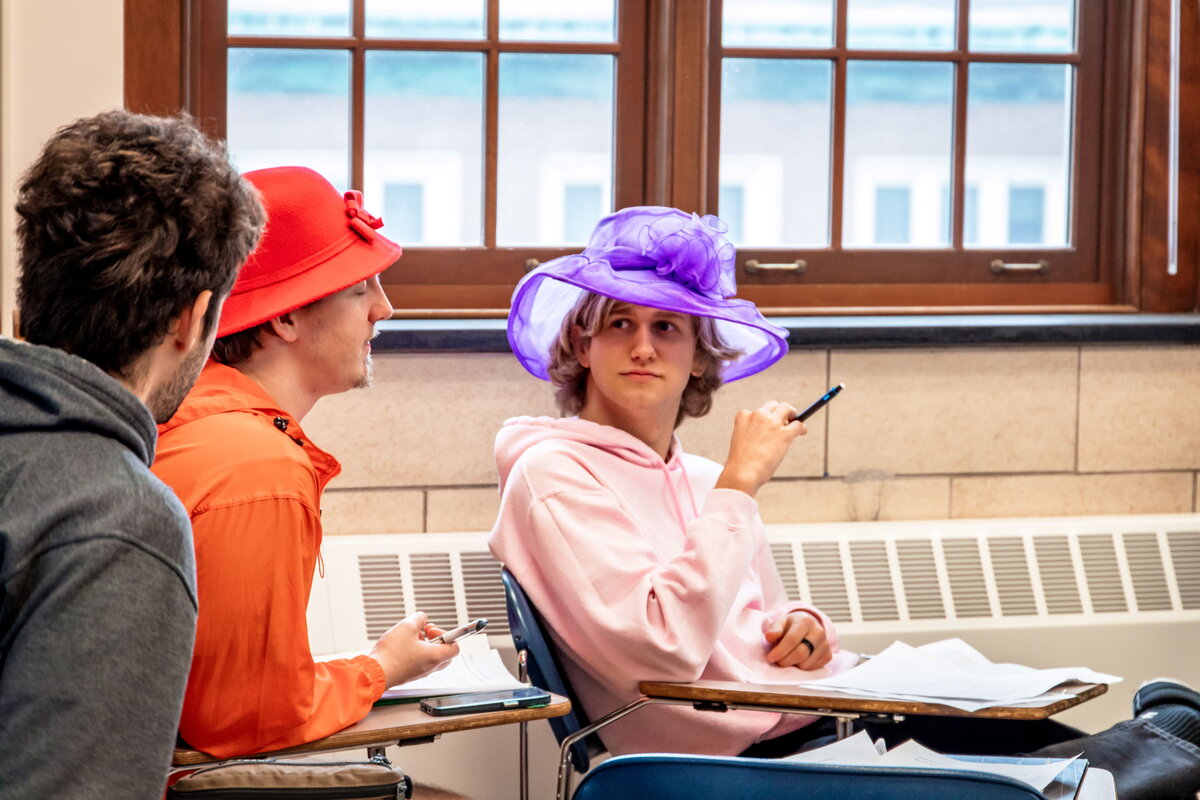
Immersive approaches to teaching history: Inside HIST 203: Reacting to the past
Imagine it’s 1913 and you’re in a tiny basement restaurant called Polly’s in Greenwich Village, New York. Change is in the air and intellectuals, artists, and activists gather to debate the issues of the day: women’s suffrage, labor unions, socialism, birth control, and anarchism. The nightly crowd includes figures like Emma Goldman, Margaret Sanger, Bill Heywood, W.E.B. Du Bois, and Charlotte Perkins Gilman. Those supporting suffrage and labor have formed factions and each night they attempt to convince you to support their cause.
That’s the setting students who took HIST 203: Reacting to the Past, taught by Robert W. Schaefer Professor in Liberal Arts and Sciences Leslie J. Reagan, found themselves in during the spring 2024 semester.
Title
Phi Alpha Theta hosts first regional history conference “Conflict and Culture”
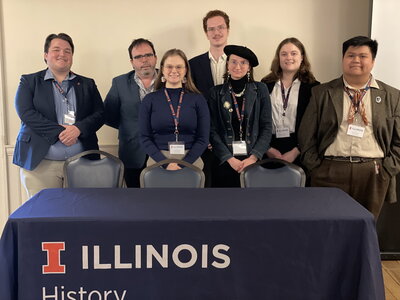
The 2024 Phi Alpha Theta Regional History Conference “Conflict and Culture,” held Nov. 8-9, was a huge success! Attendees were engaged by seven panels of undergraduate and graduate presenters and a wonderful keynote by the Department of History chair, Adrian Burgos, Jr. In addition to participants from Illinois, the conference drew students from Loyola Marymount University, Loyola University Chicago, Missouri State University, Ohio State University, and University of Wisconsin-Madison. Panelists covered a variety of topics and time periods, ensuring that everyone who attended left with a new piece of information.
The planning of this conference was undertaken by a committee of undergraduate history students. We give special thanks to the conference’s many sponsors from across campus, and the Department of History who helped us throughout the conference planning process.
By Graciela Best
Title
The next generation of historians
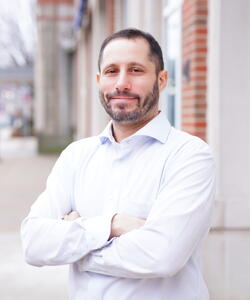
I like to ask graduate students what they study and why they study it: What gets you up in the morning? The answers never fail to inspire. In the last few years, while teaching the first semester of our first-year doctoral sequence and now with the honor of serving as director of graduate studies, I’ve heard students offer all kinds of answers. Some want to shape scholarly conversations. Others want to decolonize or smash paradigms. Many want to make positive change in the world. With many challenges facing higher education, and with the academic job market still grim, these answers have landed impactfully and provided welcome reasons to get myself out of bed on mornings when either the Illinois winter or the many challenges of the moment make it appealing not to do so.
This fall I taught a graduate seminar on race and politics. In the preface to one assigned book, we learn that the author, the enormously influential Black historian Cedric Robinson, forced his way by sheer will and endurance into college at UC-Berkeley in 1958. Receiving no help or direction about the process, he just showed up and stood in line to gain admittance. In line behind him was Shyamala Gopalan, an immigrant and incoming doctoral student who, among other things, would become the mother of Vice President Kamala Harris. On the last day of class, we closed our eyes and imagined ourselves standing in line with Robinson and Gopalan, embarking on our own trajectories and careers that will change the world in new and different ways. I don’t know what our current graduate students will go on to do, but I am certain that it will be meaningful, and that is more than enough to get me out of bed these days.
Marc A. Hertzman, Director of Graduate Studies
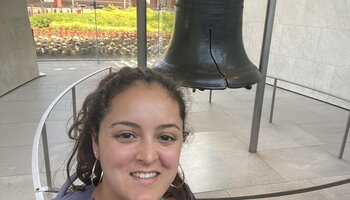
Following the Trail of the Eugenics Record Office
Grace Maria Eberhardt was one of the recipients of the 2024 William and Virginia Waterman Scholarship. She traveled to Cold Spring Harbor Laboratory in Long Island and the American Philosophical Society in Philadelphia to conduct research on how U.S. eugenicists and bureaucrats racially constructed and classified Latinos in the early 20th century, and their views on "mixed-race" and "hybrid" individuals.
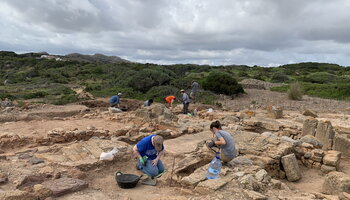
Excavating a Roman basilica in Menorca
Cade Meinel was the recipient of the 2024 J. David Hoeveler Summer Research Scholarship. He traveled to the Sanisera Archaeological Institute on the island of Menorca to learn about Roman and late-antique material culture and archaeological methods to aid his research into piracy and naval conflicts of Mediterranean maritime communities during late antiquity.
How a professional blues drummer became a historian
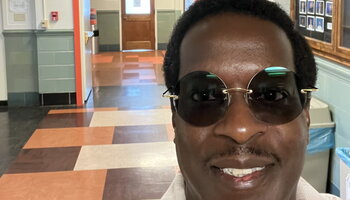
When Andrew Thomas, a former professional blues drummer, decided to study history, it was during the pivotal summer of 2020. The Covid-19 pandemic had shut down music venues across the world and put his 20-year career as a blues musician on pause. That summer, the U.S. was also in the midst of a reckoning with police brutality against African Americans after the death of George Floyd. The events of that summer where the catalyst for his decision to become a historian.
Title
22nd Women’s and Gender History Symposium
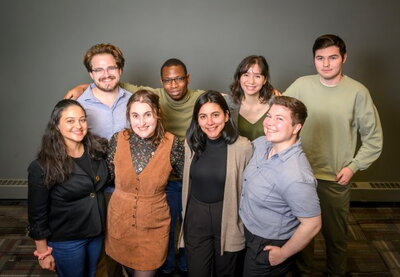
The 22nd Women’s and Gender History Symposium, “Gender Taking Place,” drew attendees virtually and in-person from across the world. The symposium featured keynote speakers Jessica Zychowicz, director of Fulbright Ukraine and IIE Kyiv, and Rosalyn LaPier, professor of History at the University of Illinois. Drs. Zychowicz and LaPier also gave a Q&A entitled “Making History.” Through this discussion, symposium attendees learned not only from our speakers’ research, but also about the ways their professional lives intersect with social responsibility and community involvement. Graduate scholars presented their original research a range of topics from many disciplines, including sociology, women’s, gender, and sexuality studies, art history, anthropology, English, and architecture. The interdisciplinary nature of this conference was also reflected in the broad sponsorship of 24 departments across campus. The WGHS organizing committee was a mixture of first-, second-, and third-year PhD students and MA/MS students. Visit the WGHS website for more information.
By Priyanka Zylstra and Tabitha Cochran
Recent PhDs Awarded
- Elizabeth Abosch (Mark Steinberg), “Soundtracking Sovietness: Daily Life, Labor, and the Power of Song in Russia, 1920-1980” (May 2024)
- Xiao Chen (Kai-Wing Chow), “Punishment, Frontier, and Ethnicity in the Making of the Qing Empire, 1636-1912” (May 2024)
- Christopher Goodwin (Peter Fritzsche), “Broken Supermen: Disabled Veterans and Soldiers in Nazi Germany, 1939-1945” (May 2024)
- Eric Toups (Robert Michael Morrissey), “Bvlbanch: Place and Power in the Early Mississippi Delta Location” (May 2024)
- Adrian van der Velde (Craig Koslofsky), “’When Unwelcome Night Came’”: A Nocturnal History of the Colonial Caribbean, 1660-1800” (May 2024)
- Stephen Vitale, (Antoinette Burton), “South Asian Women Doctors and the Networking of Medical Institutions in the Late-Victorian British Empire” (May 2024)
- Franziska Yost (Mark Steinberg), “Russian Blue: The Production of Queer Identity in 1990s Russia” (August 2024)
Recent MS/MAs Awarded
- Laurel Darling (Dana Rabin) May 2024
- Jason Smith (Daniel A. Gilbert) May 2024
- Trevor Stratton (Robert Michael Morrissey) May 2024
- Kevin Wiggins (Ralph W. Mathisen) December 2023
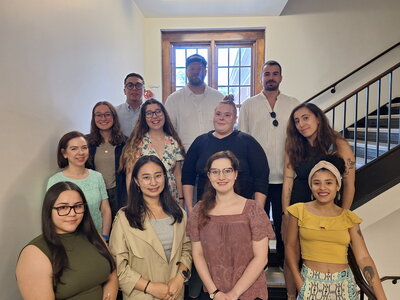
2024-25 Incoming PhD and MS/MA Graduate Students
Recent PhD Employment and Postdocs
- Elizabeth Abosch, Lecturer, Russian East European, and Eurasian Center, University of Illinois Urbana-Champaign
- Xiao Chen, Assistant Professor, History Department, University of California Riverside
- Christopher Goodwin, Assistant Professor, European History, University of Florida
- Eric Toups, Tenure-track Assistant Professor, Indigenous & Early American History, University of Michigan
- Adrian van der Velde, Visiting Assistant Professor, History Department, Rose-Hulman Institute of Technology
- Franziska Yost, Instructor, Tarleton State University
Title
Alumni Updates
Lloyd Ambrosius (BA, ’63; MA, ’64; PhD, ‘67) passed away May 8, 2024. He was the Former Samuel Clark Waugh Distinguished Professor of International Relations & Emeritus Professor of History at the University of Nebraska. He shared much of his life and intellectual story in a recent H-Diplo roundtable on Learning the Scholar’s Craft.
Jacob M. Baum (MA, ’09; PhD, ‘13) was named the Buena Vista Associate Professor of History at Texas Tech University, the only endowed chair in the department. The chair will allow him to complete a disability microhistory project and begin work on a bigger monograph on disability and state violence in the early modern world.
Annaliese Jacobs Claydon (MA, ’09; PhD, ‘15), an adjunct researcher in the School of the Humanities, College of Arts, Law and Education at the University of Tasmania, published Arctic Circles and Imperial Knowledge: The Franklin Family, Indigenous Intermediaries, and the Politics of Truth (Bloomsbury).
Brian M. Ingrassia (MA, ’02; PhD, ‘08), an associate professor at West Texas A&M University, published Speed Capital: Indianapolis Auto Racing and the Making of Modern America (University of Illinois Press).
Matthew D. Norman (MA, ’95; PhD, ‘06) published Knowing Him by Heart: African Americans on Abraham Lincoln (University of Illinois Press), which he co-edited with Fred Lee Hord. The book was awarded the 2024 Abraham Lincoln Institute Book Award.
Gary Reger (BA, ‘75) retired and is living in New Mexico, where he continues to publish book chapters and has two books in press. He cites the fundamental training he enjoyed as an undergraduate at Illinois for his abilities as a historian.
Morgan Ridgway (PhD, ‘22), a lecturer in history and literature at Harvard University, has been awarded an American Council of Learned Societies Leading Edge Fellowship. They have been appointed as a Research Associate for PHI, a nonprofit that works to transform eldercare and disability services by promoting direct care jobs as the foundation of quality care.
Alexander Rushing (BA, ‘24) is a visiting scientific specialist in historic mining & geology at the Illinois State Geological Survey. He works on the Abandoned Mine Lands and Mined Out Areas team, digs into historical records, and seeks out maps and data sources to locate unknown or unlocated Illinois mines. Read a profile by the Prairie Research Institute.
Charles J. Shields (BA, ’74, English; MA, ’79, history) retired after a 25-year career as a writer. He is the author of 20 nonfiction books for young readers, and biographies of Harper Lee, John Williams, Kurt Vonnegut, and Lorraine Hansberry. Read an interview about his career.
Mark Stryker (BA, ‘85) was inducted into the Michigan Journalism Hall of Fame in 2020 and continues to work as an author, journalist, and filmmaker in Detroit. The documentary he wrote and co-produced, The Best of the Best: Jazz from Detroit, premiered in April 2024 and is headed for the festival circuit. The film was inspired by his award-winning 2019 book Jazz from Detroit (University of Michigan Press).
Wayne C. Temple (BA, ’49; MA, ’51; PhD, ‘56) celebrated his 100th birthday. He also published The Dinkels and the Lincolns (Abraham Lincoln Association), and the Old State Capitol Foundation established The Wayne C. and Sunderine Temple Award. A biography is being written about Temple by Alan Hunter, and Steven K. Rogstad is collecting his articles for publication.
Russell Wigginton (PhD, ‘01) is the president of the National Civil Rights Museum. Read a profile on his career in Illinois Alumni.
Jim Young (BA, ‘73) retired after 30+ years with the city of Seattle Department of Transportation and Snohomish County Public Works Department as the senior funding coordinator. His history BA was a significant help in conducting multi-disciplinary research for his job. He also earned a master’s degree in Urban Planning from Portland State University. Both degrees helped him become a successful public works grant writer that funded millions of dollars in infrastructure projects for the city and county.
Title
Department of History Awards
The Department of History is pleased to announce the winners of our 2023-2024 annual awards. These awards celebrate our faculty, lecturers, undergraduate, and graduate students to thank them for their dedicated service to our department. They also provide funding and scholarships for their research and education and honor the excellence of their work. We are grateful to the support of our donors for making these awards possible.
Title
Invest in the future of the Department of History
Our department relies on the generous support of alumni and friends to provide the best possible learning and teaching environment for our students and faculty members. This past year, the department has benefited from numerous donors. We thank all of you for your generous support.