Black Music
HIST 104
What is black music, and how do we know what we think we know about it? Together, we will examine musical creations pioneered by Africans and individuals of African descent over several centuries and across hemispheres. Doing so will allow us to consider the unity of the African Diaspora and its music, and also examine internal differences and diversity. Special focus is given to Latin America and the U.S., but, depending on the semester, we will also read about, listen to, and talk about music and musicians in Asia, Africa, and Europe.
Gen Eds: Cultural Studies - US Minority; Humanities – Hist & Phil
Madness and Modern Society
HIST 236
Explore the development of the mind sciences in modern Europe from the beginning of state-regulated asylums to the advent of pharmaceutical treatment and care in the community. Using a combination of primary sources and secondary texts, we will examine how the diagnosis and treatment of "madness" in its many forms has been shaped through the interaction of social, political, economic, and cultural factors from roughly 1750 to the 1990s.
Gen Eds: Humanities - Hist & Phil; Cultural Studies-Western
Ancient Rome
HIST 241
Survey of the political, social, economic, military, institutional, religious and cultural development of Rome from 753 BCE until 480 CE.
US Foreign Relations since 1917
HIST 274
Over the course of the twentieth century the United States rose to superpower status, in the process profoundly shaping world affairs. Students will study the connections between U.S. and global history in this pivotal period. Explores the impact of the United States on world affairs from roughly 1917 through the end of the Cold War. Attention given to the perspectives of people affected by U.S. policies and the limits of U.S. power in the face of developments such as anticolonial nationalism and great power rivalries.
Gen Eds: Humanities – Hist & Phil; Cultural Studies - Western
Middle East since World War I
HIST 337
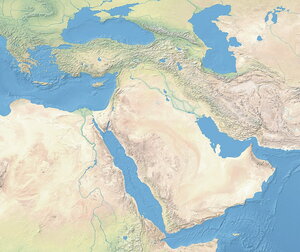
The ship stuck in the Suez Canal, the Iranian revolution and the embargo, the Arab Spring, ISIS, Oil money, Islamism, Caliphate, the civil war in Syria, the Arab Spring, the Israeli-Palestinian conflict, the Yazidi persecution, Jihad – In this dynamic fascinating class, we will touch upon the issues, questions, and controversies that continuously draw the world's attention to the Middle East. By becoming familiar with concepts (like Jihad, caliphate, political Islam, etc.) the students will gain knowledge that will allow them to better understand the current state-of-affairs.
Origins of the Civil War
HIST 373
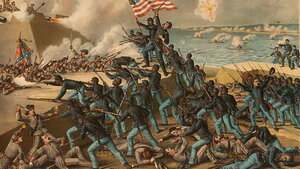
Examination of changes in economic, social, cultural, and political life in the United State that ultimately plunged the nation into the bloodiest and most important war in its history. Particular attention is paid to the way in which diverse segments of the country's population - North and South, urban and rural, rich and poor, slave and free, black and white, male and female - affected and were affected by these changes.
19th Century Romanticism and Politics
HIST 350
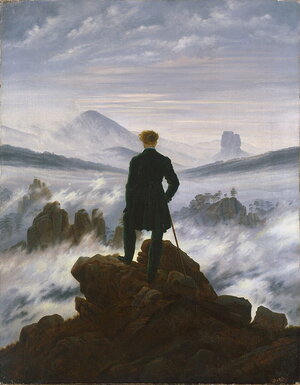
This course examines the political, cultural, and societal transformation of Europe in the nineteenth century following the French Revolution and Napoleonic Wars and up to the outbreak of World War I. The class will explore these transformations, from the birth of Romanticism, represented in works like Mary Shelley’s Frankenstein; to the rise of nationalism, reflected in the wars of Italian and German Unification; and the creation of global empires, formed by European powers through diplomacy and conquest. In the aftermath of nearly three decades of continuous war, Europe sought to rebuild itself and prevent future upheaval on the continent, while exploiting its colonial holdings and spreading “civilization.” Students will learn how this period established our modern world and understand how its ideologies like Romanticism, liberalism, communism, and nationalism continue to shape the present.