
Black Music
HIST 104
What is black music, and how do we know what we think we know about it? Together, we will examine musical creations pioneered by Africans and individuals of African descent over several centuries and across hemispheres. Doing so will allow us to consider the unity of the African Diaspora and its music, and also examine internal differences and diversity. Special focus is given to Latin America and the U.S., but, depending on the semester, we will also read about, listen to, and talk about music and musicians in Asia, Africa, and Europe.
Gen Eds: Cultural Studies - US Minority; Humanities – Hist & Phil
Latin America to Independence
Section-Colonial Latin America: Atlantic Encounters, Environments, and Entanglements
HIST 105
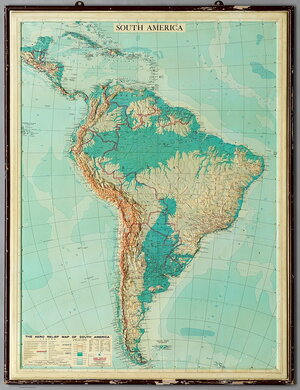
How did encounters among Indigenous peoples, Africans, and Europeans transform Latin America and the wider world? This course explores colonial Latin America from Atlantic voyages to independence through the movement of people, knowledge, plants, animals, diseases, and commodities. Comparing Spanish and Portuguese America, we examine conquest, slavery, ecological change, race relations, and religious practices. We ask how communities exchanged knowledge, adapted to colonial pressures, and pursued independence. Maps, objects, images, and discussion boards invite students to build knowledge of Latin America through diverse historical media. No previous study of Latin American history is required.
Gen Eds: Humanities – Hist & Phil; Cultural Studies - Non-West
History of Medicine in the United States
HIST 263
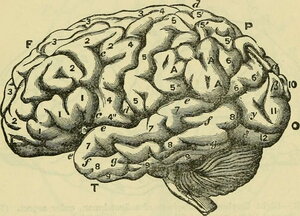
Medicine and public health in the United States from the colonial period through the twentieth century. Topics include medical theories, therapeutic practices, and institutions as determined by science, culture, politics, law, and social structures. Additional attention will be paid to illness and epidemics; health care providers, patients, and public policy. Throughout, the course will highlight race, sex, (dis)ability, and other social categories that have affected medical care and been defined in medical terms.
Gen Eds: Humanities - Hist & Phil; Cultural Studies-US Minority
Asian American History
HIST 283
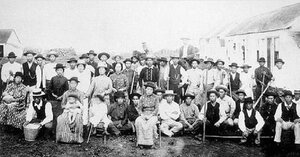
Asian Americans are a dizzyingly diverse group. Most do not even see themselves as "Asian American." How then can we speak of "Asian American history?" What issues arise in trying to incorporate this diversity into one historical narrative, one story? In this course, we will attempt to grapple with this problem. We will relate the activity and the historical circumstances Asian Americans have faced in the United States to the themes of capitalism and democracy, unity and difference that have challenged all Americans. We will examine the reasons why men and women of the Asian continent migrated to what is today the United States, the ways they establish communities and related across generational divides, the challenges of racism, gender, discrimination, and class exploitation they faced, and the ways they responded to their new conditions. We will explore Asian American history using primary sources, literature, and film as our windows.
Gen Eds: Humanities – Hist & Phil; Cultural Studies - US Minority

US in an Age of Empire
HIST 380
Study of the imperial dimensions of U.S. history from about 1877 to 1920. This was an era marked by an imperial world system, unprecedented levels of international trade and investments, massive labor migrations, significant missionary endeavors, and consolidation of U.S. power over Native Americans, and growing U.S. political and military assertion in the international arena. Considers how the United States and its peoples positioned themselves in an international context by investigating not only government policies but also commercial endeavors and cultural practices.
Egypt since World War I
HIST 338
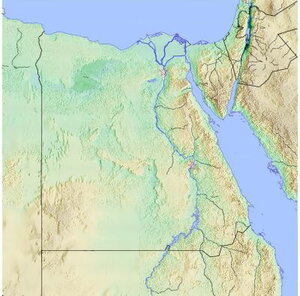
Examines the twentieth-century history of Egypt, emphasizing the internal social, political, economic, and ideological developments, with attention to Egypt's role in regional and international politics. Readings include novels and short stories to introduce students to modern Egyptian culture.
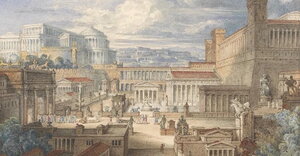
The Roman Empire
HIST 441
Examination of the political, social, economic, military, institutional, religious and cultural development of the Roman Empire from the reign of Augustus (27 BCE - 14 CE) through the fall of the Western Roman Empire ca. 480 CE.