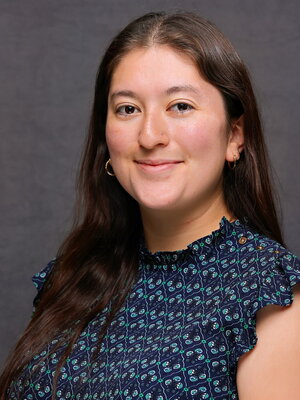
Meet Jazmin Tejeda (BA, '21, history and political science; MHRIR, '22, Human Resources and Industrial Relations), an HR Manager at PepsiCo. She credits her degree in history with teaching her essential skills in critical thinking, communication, and research as well as how to navigate complex issues through a people-focused lens. After graduating with a degree in history in political science, she earned a master's in Human Resources and Industrial Relations at the University of Illinois School of Labor and Employment Relations.
Read on to learn how her degree in history prepared her for a career in HR.
Why did you decide to pursue a degree in history?
I credit my love for history to my 8th grade elementary school history teacher because she was the first person to relate the subject of history as collective human stories rather than facts that had to be memorized. I remember my teacher framing each time period we were learning as stories of people making decisions based on their experiences, perspectives, and biases, instead of making history all about inevitable causes and effects. This new way of learning history helped me relate to historical figures and actually care about the outcomes of their actions because I could understand why they made certain decisions and I was able to dissect their motives and thoughts through primary, secondary, and tertiary sources. Due to her impact, I grew to love and consume any and all history classes I could enroll in during high school, including AP history courses, which then solidified my interest in pursuing an undergraduate degree in History when the time came to apply to colleges.
Did you double major or minor in any other fields?
I graduated from the University of Illinois with a double major in History and Political Science in 2021. Both fields of study were passions of mine so I thoroughly enjoyed my time studying both, but History was the field I declared first and I spent the first year of my college career studying and immersing myself in all of the history classes I could fit into my schedule.
Did you pursue higher education after undergrad?
After receiving my bachelor's degree, I pursued my master’s in Human Resources and Industrial Relations at the University of Illinois’s School of Labor and Employment Relations. I found the MHRIR program through a graduate school fair and learned that the critical skills I have been honing during my history degree program could assist me in pursuing the field of Human Resources. In my history courses, I had been learning how to assess evidence through different sources, identify bias, and weigh competing points of view as well as learn how to organize complex ideas, which has helped me be a strategic HR Business Partner.
What was your first job after college?
I worked throughout my college years (shoutout to the Main Stacks!), but I began my post-undergraduate career as an HR Business Partner with PepsiCo. In this role, I supported the field sales teams with all people-focused items, such as workforce planning, org design and restructuring, leadership coaching and training, tackling turnover, supporting new system transformations, improving workplace culture, resolving complex employee relations, and administering company policies and ensuring adherence to labor laws, regulations, and our organizational goals. This was my first full-time role after college and it taught me so much about myself and how businesses run.
What is your current career and how does your degree in history inform your work?
I’m still in the HR field and currently I’m an HR Manager in Dallas, Texas. I learned so many essential skills from my history degree, including critical thinking, navigating complexity, communicating clearly and concisely, and researching thoroughly. History informs my work because I have to analyze our business decisions through a people-focused lens and evaluate how each policy, change, or rollout will affect our team members and business. This is where my history skills are an advantage in stating my case and consulting my business partners on the best path forward.
What do you enjoy about your work?
I enjoy being a strategic thought partner and having the autonomy to plan the short-term and long-term objectives for the business. I really love getting to problem-solve and think through all of the pros, cons, ins, and outs of each decision and then picking the argument apart with others to make sure we’re making the right decision and pushing in the right direction.
What does a typical workday look like for you? Also, what is an example of the most interesting aspect of your job?
Everyday is different, which is something that I enjoy about my role. While I have set daily meetings, I never really know where the day will take me, especially in the manufacturing space. In general, I meet with the leadership team to discuss our site’s performance, goals, and future changes as well review workplace issues, guide disciplinary actions, and manage overall employee relations.
What advice do you have for students interested in pursuing work in your field?
A history degree builds transferable skills that are essential to the human resources field, such as being able to analyze information, recognize different perspectives, and provide arguments and recommendations. Keeping the skills that you learned in undergrad fresh will help you in keeping up with the changes to business. Also, make sure you stick with hobbies that you enjoy or continue trying out new things because once you get your first full-time job, you’ll come to appreciate all of the free time you had so much of in school.
What is your proudest achievement?
I’m looking forward to marrying my fiancée who is a fellow Illini. Professionally, I’m proud of having supported hundreds of people through my roles – the small items that take less than 15 minutes of my time are the moments that most people remember and appreciate.
To learn more about Jazmin Tejeda, you can follow her on LinkedIn.