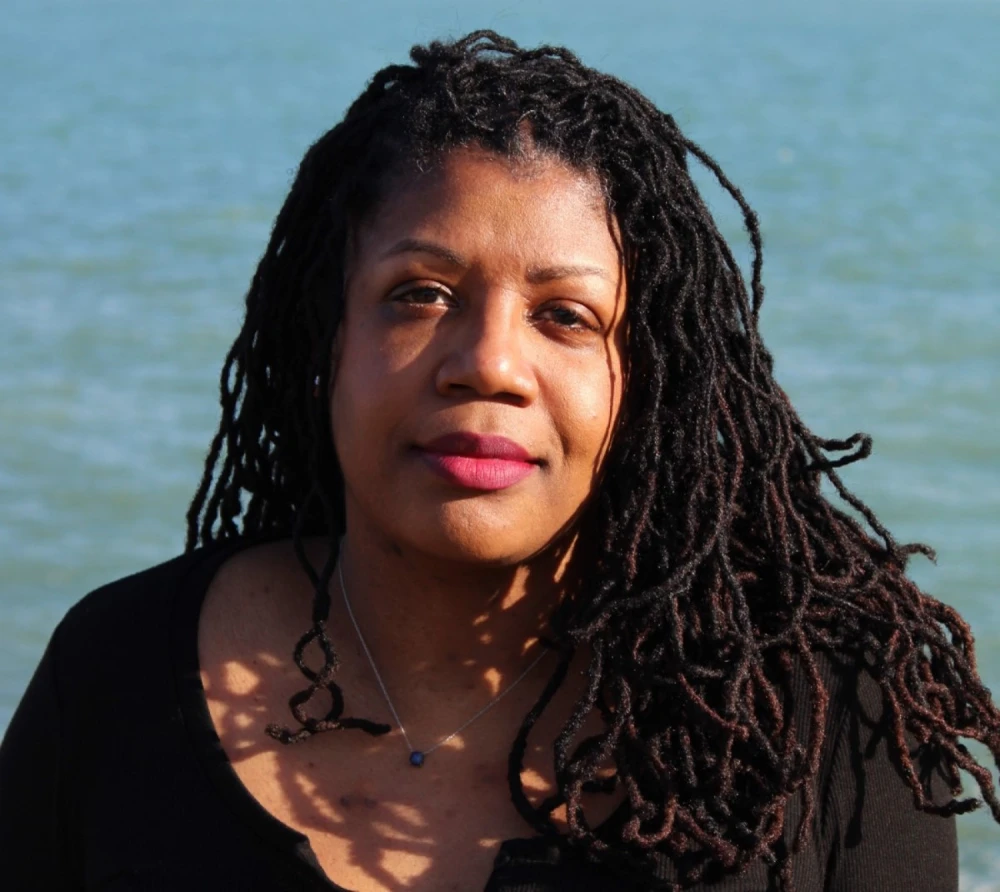
The first time Mikki Kendall (BA, ‘05, history) applied to the University of Illinois Urbana-Champaign, she was rejected. She graduated from high school at the age of 16 and though she was ready for college on paper, she said it was likely she would have flunked out.
Instead, Kendall joined the military and saw the world. She started her undergraduate degree in her mid-20s at Parkland College before transferring to the U of I, where she decided to major in history, which she thought would give her the right foundation for law school.
History wasn’t Kendall’s favorite subject in high school. She thought, like many students, that it was all about memorizing facts and dates. It wasn’t until she took an African American history course at Parkland that she learned history was about stories, and the power those stories had to explain the present.
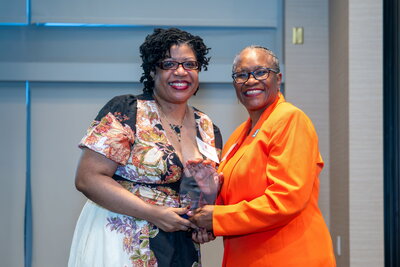
Little did Kendall know it then, but history would go on to become the foundation of her career as a diversity consultant, public speaker, and New York Times best-selling author. In 2026, the College of Liberal Arts & Sciences honored her with the Alumni Achievement award.
“I found a home when I wasn’t looking for one, and now as I stand here with this award, I just want to thank U of I for being such a wonderful launching pad. I have a great career, a beautiful family and in many ways I owe it to this town, to Parkland College, and to this amazing institution,” said Kendall in her acceptance remarks at the ceremony in April.
Learning the history of Black women
As a non-traditional student and single mom, Kendall said navigating college wasn’t always easy. But for every barrier she encountered—whether that was attendance policies that didn’t accommodate caring for a sick child, or professors who underestimated her—she also encountered people, like Department of History undergraduate advisor Sharon Michalove and professor Erik S. McDuffie, who consistently told her that she belonged.
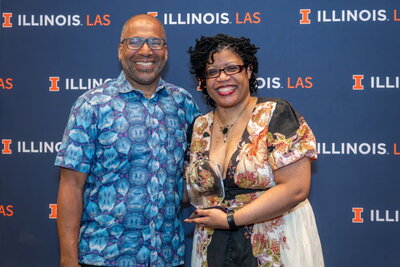
McDuffie, a professor of African American studies and history, taught a course on Black feminism that Kendall said helped her realize most of the feminist texts she’d read previously talked about women of color like a problem to be solved, instead of engaging with their concerns, which left her feeling detached from feminism.
“I was a Black single mom putting myself through college as a veteran. And those are all identities that people will tell you don't do the thing I was doing,” she said. “His class made me feel like, okay, I'm not crazy. These are things other people have encountered. These are things we should be talking about. And it tied with African American history and all these other things that made me realize that as much as I knew about Black history, I didn’t know about the history of Black women.”
Telling the truth about history
After graduating, Kendall decided not to attend law school and worked for several government offices including the IRS and Department of Veteran Affairs, where she put the research and communication skills she learned as a history major to work. She began writing on the side and eventually earned her master’s degree in writing and publishing from DePaul University. Her writing career took off in 2013 after she created the viral hashtag #SolidarityisforWhiteWomen and she was able to pursue writing full-time.
In 2020, she published her New York Times bestselling book, Hood Feminism: Notes from the Women that a Movement Forgot. While writing it, Kendall drew again on the lessons she’d learned in McDuffie’s class. She said she wrote it to fill a gap she was seeing in the feminist books released at the time.
“I noticed a trend that no one seemed to care what happened to the women who weren't wealthy and famous. And no one seemed to talk about feminism and its very real impact on a community, on a family, on how our society functions,” she said.
Professor McDuffie now assigns the book in his course, a full-circle moment for Kendall, who has been surprised at the level of success it has achieved. The book was named a Best Book of 2020 by Bustle, BBC, and Time.
Not one to rest on her laurels, Kendall wrote the graphic novel Amazons, Abolitionists and Activists: A Graphic History of Women’s Fight for their Rights at the same time as Hood Feminism. The book, illustrated by A. D’Amico, shows the connections between 4,000 years of women’s history across the world.
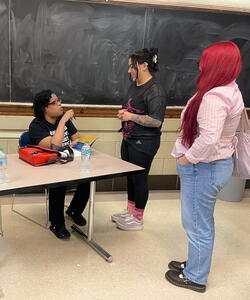
At a book talk during her visit to campus, Kendall said she wanted to show that if we don’t fight racism and misogyny at the same time, we go backwards. She wanted to make history accessible and show the regular people who were part of movements to inspire others. She encouraged students in attendance to write the book about the history they feel needed to be told.
Kendall’s latest project, The UnCanny X-Men, is a Marvel comic book co-written with Gail Simone that asks what would happen if you put superheroes in the Jim Crow South, a period that Kendall feels we often gloss over.
“I want to tell the truth about history and sometimes you have to put it into fiction to get people to engage with it,” she said. “If we keep pole vaulting over the uncomfortable parts of history—A, we're lying, we're not teaching history—but also we're perpetuating a problem.”
Your degree prepares you for jobs that haven’t been invented yet
Kendall will return to campus in May as the speaker for the 2026 History and Philosophy Convocation ceremony. She said she wants to tell graduates the value of the skills a humanities degree provides.
“Communication skills, creative thinking skills, research skills, these are things that will always, always be in style. They will always be useful,” she said.
She also said the U of I taught her to pivot in her career and that students can use their degree for jobs that haven’t been invented yet.
“You have to be prepared for the idea that you do not know how you're going to use this degree across your lifetime,” she said. “Be prepared to pivot.”