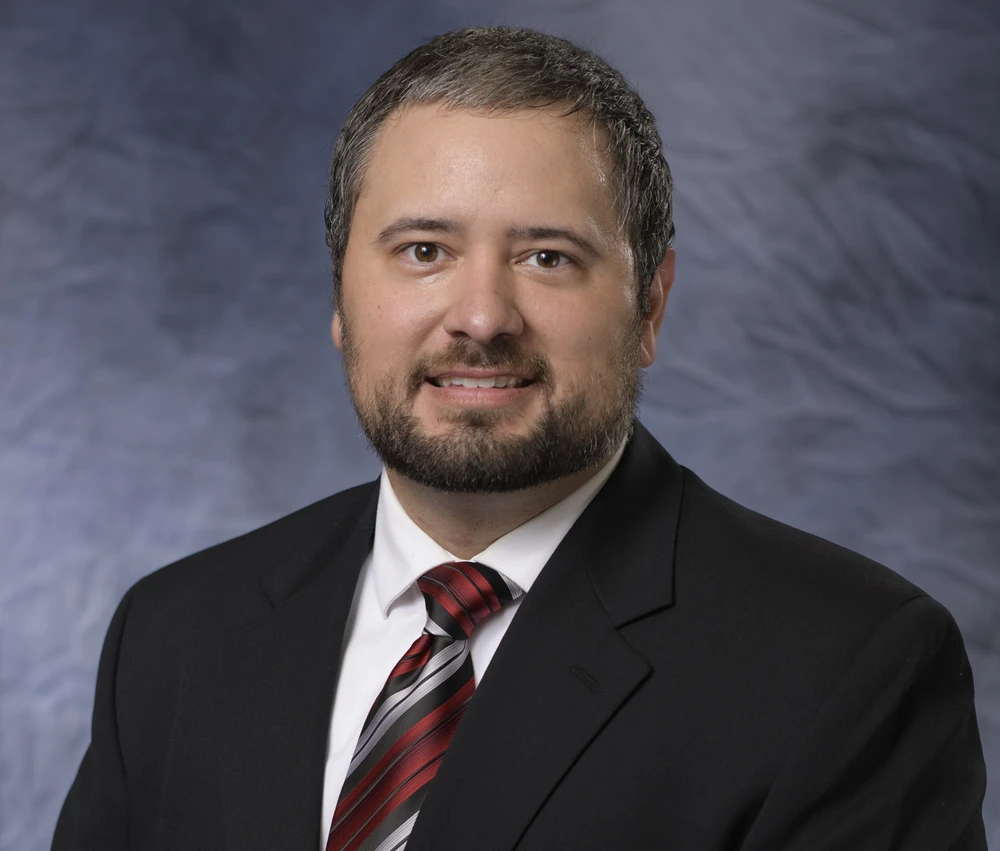
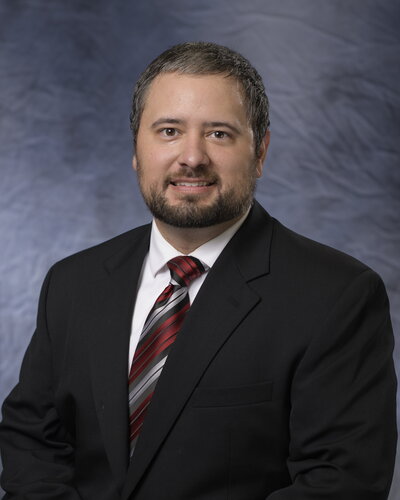
When you walk into senior lecturer Marco Jaimes’ office, you get a sense of the welcoming atmosphere he creates in the classroom. Ambient flute music plays in the background as he sits leaning back in his chair, dressed in a short-sleeved button-up with a graphic print of Star Wars characters, drinking tea from a matching mug.
He has a collection of button ups with fun graphic prints that he begins to wear around mid-semester to liven things up, he says. Keeping students engaged in the classroom is an art Jaimes continually works at and was recently recognized for by the College of Liberal Arts & Sciences, which awarded him the 2026 LAS Excellence in Undergraduate Teaching Award for Instructional Staff.
Jaimes, a historian of the Habsburg monarchy, loves his research, but it’s in the classroom where he feels most at home.
“I enjoy the research, I enjoy serving on various things, but it's really the teaching. That's the fun part, I think,” said Jaimes.
Jaimes earned his PhD in history from the University of Illinois in 2021 and has been a lecturer in the Department of History for the last five years. He considered teaching high school, but he prefers teaching students in college who are learning to be independent; he likes helping them learn accountability and communication skills.
The classes Jaimes’ teaches are usually full, a testament to his skill in the classroom and reputation as an excellent teacher. He focuses on building relationships with students, creating a space where they want to participate in the conversation.
“I never cold call. That's a big no in my class. Because it's all about getting them to volunteer and be willing to put themselves out there. I don't think cold calling really helps anything to that degree. But it's a multitude of things—trying to be open, trying to be a sympathetic ear, encouraging that permission over forgiveness, the engagement of emailing for even the simplest things, trying to get them into office hours,” he said. “It's basically throwing everything at it and seeing what sticks.”
He typically teaches three classes per semester and looks for opportunities to bring his own research or interests into the classroom to keep it interesting. In the fall, he’ll teach HIST 365: Fiction and Historical Imagination, which examines depictions of empire in media ranging from Gladiator to Star Wars to chart how ideas about empire have changed over time. He’ll also teach a course on 19th century romanticism and politics.
Every semester he teaches a section of the department’s core course HIST 200: Introduction to Historical Interpretation, that teaches majors key skills like how to analyze historical scholarship and formulate historical arguments. The sections he teaches are always popular with students.
“Not only did Dr. Jaimes display a noticeable passion for the subjects covered in class, but he also delivered the information in a clear and engaging manner, always addressing any questions that came up,” wrote a student in the nomination for Jaimes’ award.
This spring his section covers monarchy, a topic influenced by his own research on Franz Joseph.
Exploring how subjects understood the Habsburg monarchy
Franz Joseph reigned over the Habsburg empire for seventy years during a transformative period that ended with the assassination of his nephew and heir presumptive Archduke Franz Ferdinand and the outbreak of World War I. Focusing on one region, the Bohemian Crownlands, Jaimes explores how regular people understood and connected to the monarchy and how the state tried to gain support by promoting loyalty to the emperor.
“I was fascinated with this idea of as things are changing, technologies are being adopted, new ideologies are forming, you still have this monarchy,” he explained. “How do the people in that region connect to the monarchy? What do they see in him? What do they want from him? What do they think is achievable?”
He’s currently working on transforming his dissertation, “The Unifying Habsburg Monarchy?: Franz Joseph and the Bohemian Crownlands 1867-1916," into a book. He also hopes to someday return to research he did for his bachelor’s thesis on empress Maria Theresa, who ruled the Habsburg monarchy from 1740-1780.
“She has a fascinating history that predates Queen Victoria, because when you think about Victoria, you think about her dedication to her husband and that she dresses in black for the rest of her life when her husband dies. Maria Theresa did that all before her. There's actually a lot of funny parallels like that, where the Habsburgs have a lot of the things we associate with the British monarchy, but because they're German-speaking, they don't get that attention,” he said.
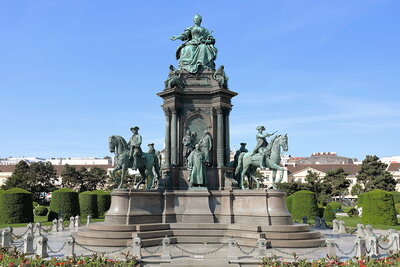
He first learned about Maria Theresa from a footnote that mentioned her statue in Vienna. He visited the statue on a study abroad trip he took as an undergraduate and his fascination with Habsburg history began. He credits the trip and Maria Theresa with inspiring him to become a historian. Very little had been written on her at the time, and he found it gratifying to uncover her story from the footnotes of history.
Creating the Study Abroad in Prague program
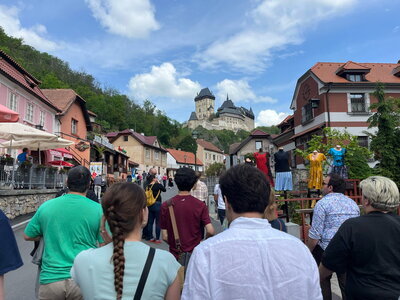
That trip also inspired his co-creation of the department’s Study Abroad in Prague program with associate director of undergraduate studies Stefan Djordjevic. Both were inspired by the transformative experiences they had while studying abroad as undergraduates. They wanted to pay it forward and provide an opportunity for students to actively engage with different people and cultures.
“I think being in a place and being able to see things in person means something significantly different than just looking at a picture,” said Jaimes. “Engaging with other cultures, with other peoples is part of what makes the field seem less of a relic of the past.”
The program will enter its third year in 2026. It’s been popular with students, with several citing it as one of their favorite experiences at Illinois.
"The trip gave me a new perspective on how we interact with history in the modern day. It was also fun to explore such a unique place with a great group of classmates,” said alumna Rachel Danna Mulick (BA, ‘25, history and Spanish).
Jaimes hopes students will pay the experience forward and encourage others to travel to explore a place’s history where it happened. The program has provided yet another great opportunity for Jaimes to create connections with students and get them engaged in history.