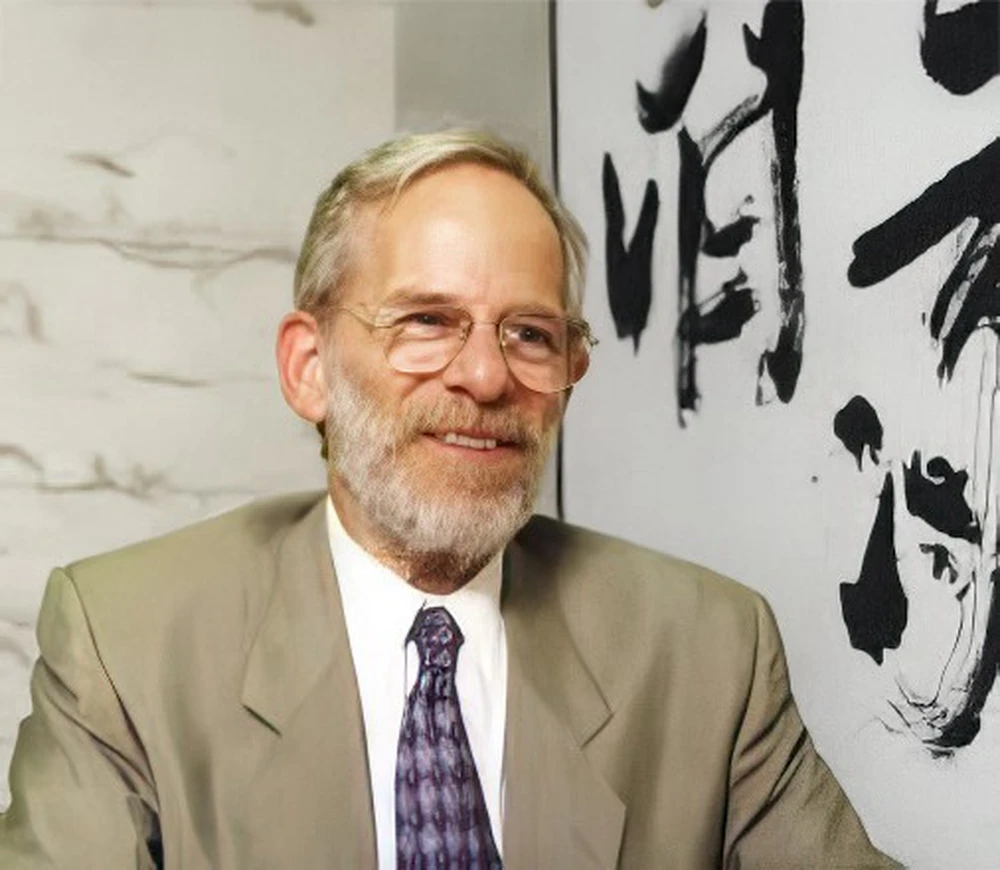
Ronald P. Toby was a pioneering historian of Korea-Japan relations. While he established his scholarly reputation as a specialist of early modern diplomatic history, his later works bridged disciplinary boundaries by incorporating anthropology and visual art. Toward the end of his career, he was collaborating with Japanese historians to explore the ways in which the “foreign” was represented in the artistic expressions of early modern Japanese people.
In 1977, Toby received his doctorate from Columbia University with a dissertation entitled, “The Early Tokugawa Bakufu and Seventeenth Century Japanese Relations with East Asia.” After briefly teaching at the University of California, Berkeley, in 1978 he joined the faculty at the University of Illinois at Urbana-Champaign. Prior to his retirement in 2012, he taught briefly at Kyoto University in the mid-1990s and served as a Professor in the Faculty of Letters at the University of Tokyo from 2000 to 2002. At Illinois, Toby taught a variety of courses on the history of Japan and East Asia and advised numerous graduate students. Throughout his career, he was a leader in the field of Japanese history with numerous articles and book chapters published in both English and Japanese.
Ronald Toby’s first monograph, State and Diplomacy in Early-Modern Japan: Asia in the Development of the Tokugawa Bakufu (Princeton University Press, 1984; reprint 1991) was based on his PhD dissertation. Translated into Japanese as Kinsei Nihon no kokka keisei to gaikō in 1990, the monograph received intense scholarly attention in Japan. In the wider global community of Japan scholars, the book came to be seen as a “must” read for anyone studying Japanese history. State and Diplomacy challenged the prevailing understanding of Tokugawa-period Japan as being characterized by a policy of “sakoku” that “closed” the country to foreign contact. By demonstrating that the Tokugawa regime maintained an active network of information acquisition, Toby brought about an important paradigm shift within the field of Japanese history and paved the way for a new generation of scholars to explore the different ways in which early modern Japan remained connected to and engaged with East Asia and beyond.
After the publication of State and Diplomacy, Toby directed his interest in Japan’s foreign relations to the cultural understanding of how people in early modern Japan recognized “others.” Working with the prominent Japanese historian Kuroda Hideo of the Historiographical Institute at the University of Tokyo, he turned his attention to the period’s rich visual culture of scrolls, folding screens, and woodblock prints, “reading” them as indispensable historical sources of insight into Japan’s early modern past. In 1994, Kuroda and Toby coauthored Gyōretsu to misemono (Processions and Spectacles) as part of Asahi Shimbun Publications’ series Rekishi o yominaosu (Rereading History). Building on his vast knowledge of Tokugawa-period diplomatic interchange, Toby consulted a wide range of visual materials to illuminate the festivity and spectacle that surrounded the procession of one of the Korean embassies as it made its way across the country in 1748.
Toby also served on the editorial board for Zenshū, Nihon no rekishi (The Comprehensive History of Japan) a series produced by Shōgakukan, one of the most prestigious publishing houses in Japan. Appearing as the ninth volume in this series, Toby’s “Sakoku” to iu gaikō (Diplomacy Called “Seclusion”) (Shōgakukan, 2008) introduced his unique understanding of early modern Japanese history to a wider audience. Toby also served on several other editorial boards, including Early Modern Japan: An Interdisciplinary Journal and Pan-Japan: The International Journal of Japanese Diaspora as he strove to elevate Japanese Studies within the United States.
In addition to his many publications, Toby delivered countless lectures and speeches. In May 2010, for example, he appeared alongside professor emeritus Akira Iriye (Harvard University) and Fujisaki Ichirō, the Japanese Ambassador to the United States, at the Library of Congress to commemorate the 150th anniversary of the first Japanese diplomatic mission to the U.S in 1860. In his comments for that event, Toby noted how fascinated the Japanese delegation was by everything they saw at every place they visited. More than a century later, Toby returned the favor by becoming a leading figure in the promotion of cultural exploration and scholarly exchange between the United States and Japan.
In 2012, the Japanese National Institute for Humanities (Nihon bunka kenkyū kikō), a consortium of six research institutes in Japan that promote global cooperation in Japanese studies, implemented the NIHU Prize in Japanese Studies to recognize significant contributions by foreign scholars. Ronald Toby was named the first recipient of this prize, suggesting that his work had reached an audience well beyond the field of early modern Japan.
After retiring from the University of Illinois in 2012, Toby continued his research and writing. While working extensively with the National Museum of Japanese History (Kokuritsu rekishi minzoku hakubutsukan) in Chiba, he published the monograph Engaging the Other:‘Japan’ and Its Alter-Egos, 1550-1850 (Brill, 2019). This monograph represented the culmination of his longstanding research on the depiction of “otherness” in early modern Japan. Through a thoroughgoing multi-media exploration of the visual and performing arts, combined with an analysis of “traditional” historical materials, Toby demonstrated the many ways in which the people in early modern Japan had begun to define themselves as “Japanese” through their real and imagined encounters with people from other places.
Throughout his career, Ronald Toby also inspired his students. In the undergraduate classroom, he always entertained them with his storytelling and aroused their interest in Japanese studies. Towards graduate students and especially his deshi (advisees), he was always generous with his time, often inviting them to his home to discuss their projects. In universities across the United States, Toby’s deshi continue to teach Japanese and East Asian history and to conduct research. While some of his students, predictably, have engaged key aspects of Japan’s early modern past such as social status, food culture, and markets in the Tokugawa period, others have gone further afield to study such things as education and landscapes of Japanese identity in nineteenth-century Japan, jazz music in twentieth-century Japan, and the 1964 Tokyo Olympic Games.
The scholarly spirit of Ronald P. Toby lives on through his groundbreaking research. But the colleagues and graduate students who came to know him well will miss hearing him talk passionately about his scholarship—and, of course, also about sumo and Japanese food.
About the author: Professor Akira Shimizu is an associate professor at Wilkes University. He received his PhD in history from the University of Illinois Urbana Champaign.